SINCE 2010
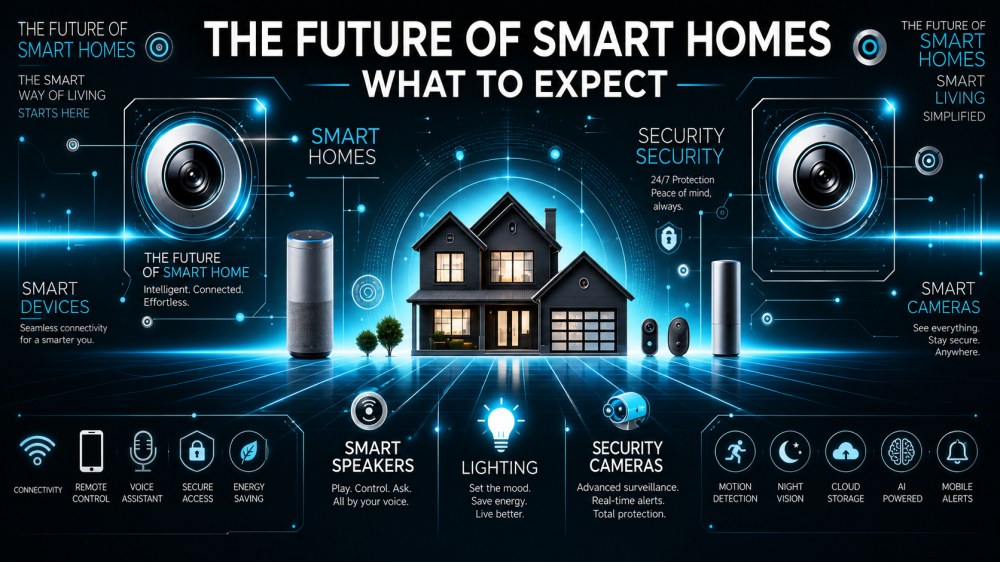
As technology continues to evolve at a rapid pace, the concept of home security is undergoing a major transformation. Traditional systems are no longer sufficient to address the complex and dynamic risks of modern living. Today, next-generation smart home security is being shaped by innovative technologies such as Artificial Intelligence (AI), the Internet of Things (IoT), cloud computing, and predictive analytics. These advancements are redefining how homes are protected, making security more intelligent, proactive, and efficient.
One of the most significant innovations in this space is the integration of Artificial Intelligence (AI) into home security systems. AI enables devices to learn from patterns, analyze behavior, and make real time decisions. For example, AI-powered cameras can distinguish between normal daily activities and unusual movements, significantly reducing false alarms. This intelligent monitoring allows homeowners to receive accurate alerts and respond quickly to potential threats.
The role of the Internet of Things (IoT) is equally important in modern smart homes. IoT connects multiple devices such as cameras, sensors, locks, and alarms—into a unified network. This interconnected system allows devices to communicate and coordinate actions. For instance, if a motion sensor detects unexpected activity, it can trigger lights, activate cameras, and send alerts simultaneously. This level of integration creates a seamless and responsive security environment.
Another emerging technology is predictive analytics, which takes security to a proactive level. By analyzing historical data and usage patterns, systems can predict potential risks and alert users before an incident occurs. For example, repeated unusual activity in a specific area can generate early warnings, allowing preventive measures to be implemented. This shift from reactive to predictive security is a major advancement in safeguarding homes.
Cloud-based security systems are also gaining popularity due to their flexibility and scalability. These systems allow homeowners to access and control their security devices remotely through smartphones or computers. Cloud storage ensures that important data, such as surveillance footage, is accessible at any time. Additionally, cloud integration enables real-time updates and system improvements without requiring manual intervention.
Biometric technologies are further enhancing security by providing advanced access control solutions. Fingerprint recognition, facial recognition, and even voice authentication are being used to ensure that only authorized individuals can access a property. These methods are more secure than traditional keys or passwords, which can be lost or compromised.
Another innovative trend is the use of automation and smart response systems. Modern security systems can automatically respond to specific situations without human intervention. For example, in case of a fire or gas leak, the system can activate alarms, shut off utilities, and notify emergency services. This rapid response capability minimizes damage and enhances safety.
The integration of cybersecurity technologies is also critical in protecting smart homes. As devices become more connected, they are increasingly vulnerable to cyber threats. Advanced encryption, secure communication protocols, and AI-based threat detection systems help protect networks and data from unauthorized access. This ensures that both physical and digital aspects of security are addressed.
In addition to individual homes, these technologies are being applied at a community level. Smart residential societies are adopting centralized monitoring systems, intelligent visitor management, and coordinated emergency response solutions. These innovations create a safer and more efficient environment for all residents.
Despite the benefits, it is important to use these technologies responsibly. User awareness and proper implementation remain key factors in ensuring effectiveness. Homeowners should regularly update systems, use strong authentication methods, and stay informed about potential risks. Technology is most effective when combined with informed and responsible usage.
Looking ahead, the future of smart home security will continue to evolve with advancements such as machine learning, edge computing, and fully autonomous systems. These innovations will further enhance the ability of security systems to adapt, learn, and respond to changing environments. The goal is to create homes that are not only smart but also capable of ensuring safety with minimal human intervention.
In conclusion, next-generation smart home security represents a significant leap forward in protecting modern living spaces. By leveraging emerging technologies such as AI, IoT, and predictive analytics, security systems are becoming more intelligent, proactive, and reliable. As these technologies continue to advance, they will play a crucial role in shaping safer, smarter, and more resilient homes for the future.






Copyright © 2024 - All Rights Reserved - Vision Media Hitech Pvt. Ltd.
Designed by VMH Web Solutions